
A private airport transfer is a pre-arranged car ride that takes a traveller from the arrivals hall straight to a hotel or address, without changing vehicles. The driver is booked in advance and knows the destination before the flight lands. For many visitors to the Turkish Mediterranean, this is the simplest way to cover the distance after a flight. The idea is easy to grasp, but a few basic terms are worth knowing first.
Readers of mersinbilgihaberi who follow travel along the Turkish coast will find the topic familiar, since many people move between airports and resort towns every season. A popular example is the antalya to kemer transfer, which links Antalya Airport (AYT) with the coastal district to the west. It is a good case for beginners because the route is clear and well documented. Understanding it helps explain how most airport transfers work elsewhere too.
What Kemer is like
Kemer is the district town that gives its name to the stretch of coast west of Antalya, where the Taurus Mountains run down to the sea. The centre is small and compact, with the yacht marina, Moonlight Beach, the bazaar and the restaurant streets all within walking distance. In the evening it is the liveliest place in the area. Many of the large hotels, however, sit outside the centre along the coast to the north and south.
Kemer also serves as a base for trips in the region. Ancient Phaselis, the Tahtalı cable car and boat tours are among the outings visitors commonly add to a stay. Because the hotels are spread along the coast, the exact address matters when planning the ride. A traveller staying in the centre has a different final stretch from one staying in a resort several kilometres away.
The route and the drive time
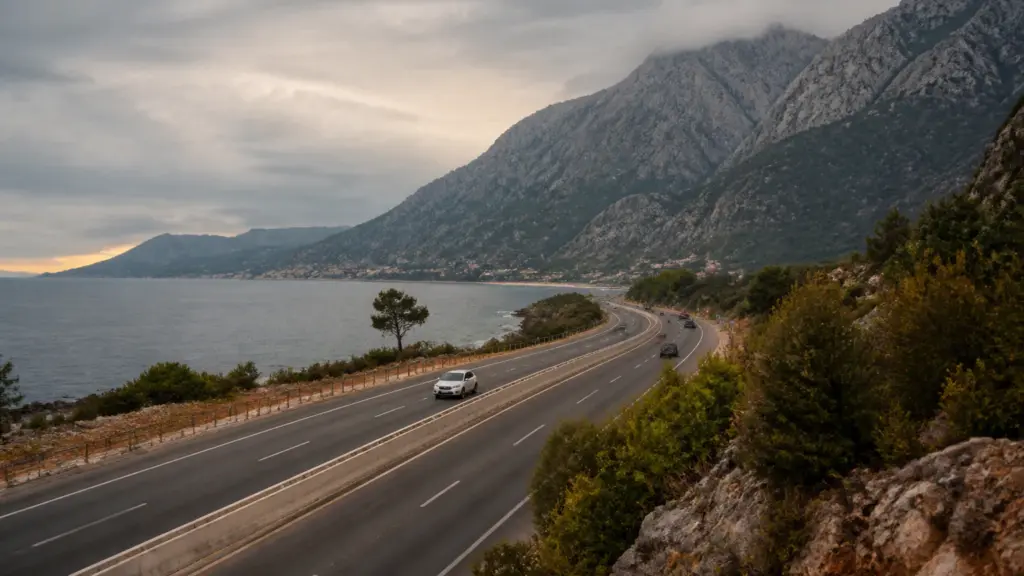
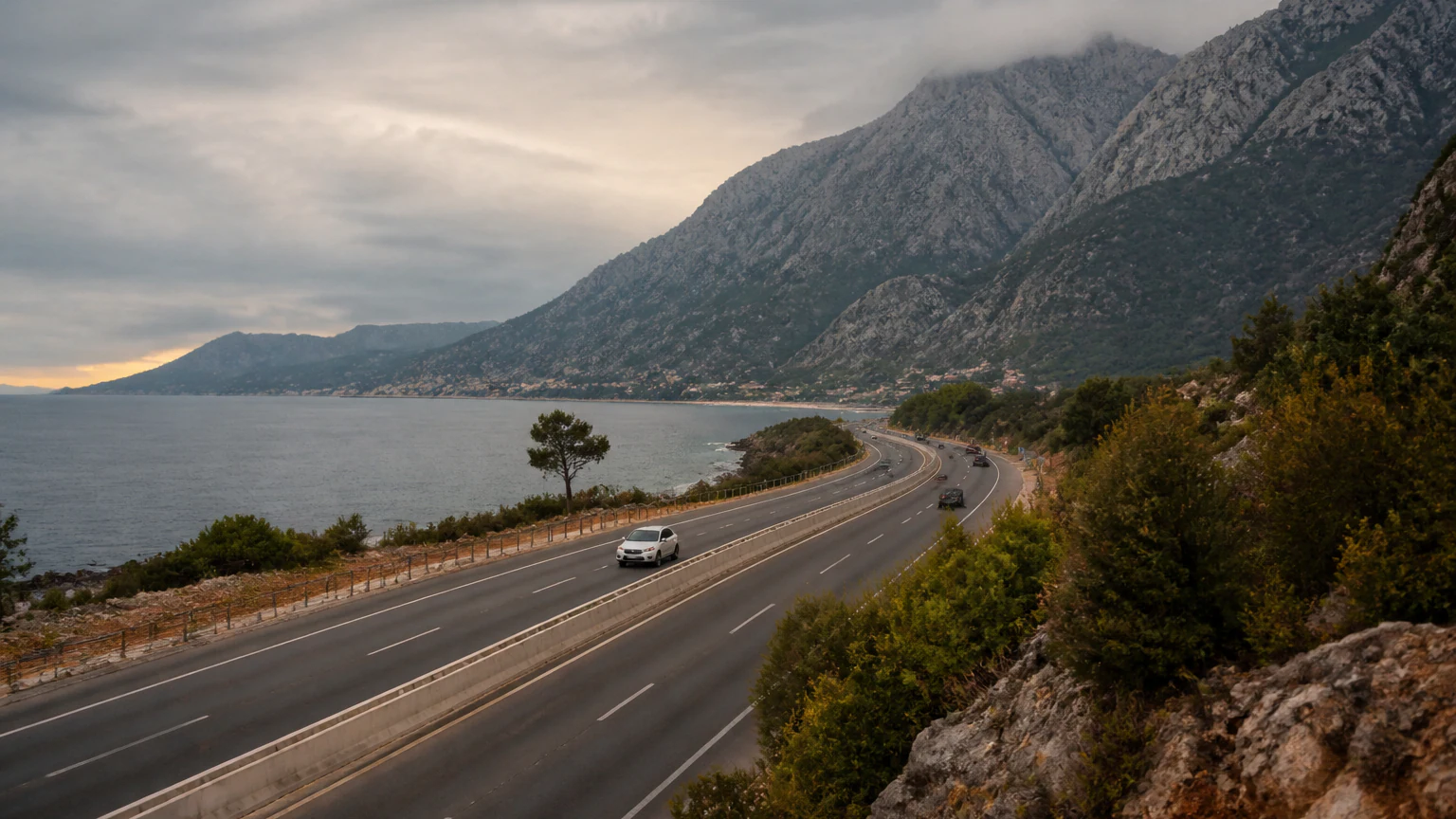
The journey has two parts. First the car leaves the airport on the east side of the city and crosses Antalya on the ring roads towards Konyaaltı. From there it follows the D400, a four-lane divided road since 2017, past Beldibi and Göynük until it reaches Kemer. The two sections feel quite different, one urban and the other running between mountains and sea.
The distance is about 58 km, and the drive takes roughly 50 minutes in normal traffic. That figure is an estimate rather than a promise, because the roads change with the season, the day and the hour. Travellers who plan connections or dinner reservations should treat it as a guide and leave some margin. Knowing the basic numbers still makes the day easier to organise.
Traffic follows fairly predictable patterns. The city section is busy on weekdays between 17:00 and 19:00, when people are heading home. The airport exit and the D400 are busy all day on Saturdays and Sundays from June to October, which is the peak holiday period. Arriving outside those windows usually means a calmer road, though flight times are rarely chosen with traffic in mind.
How a transfer booking works
Most private transfers are sold at a fixed price, which means the amount is set according to the route before the trip begins. The figure is calculated from the distance and drive time rather than from a meter running in traffic. Among the companies offering this kind of service is Vixride, whose page for this route lists a starting price, flight tracking and a meet and greet at arrivals. Reading such details carefully helps travellers compare options on equal terms.
Flight tracking means the provider follows the arrival time of the plane, so a delayed flight does not leave the driver waiting at the wrong hour. Meet and greet means the driver waits in the arrivals area, often with a name sign, and helps with the first steps. Giving the hotel’s name when booking makes it easier to go directly to properties outside the centre. These small details are the practical core of a good arrival.
Link: https://vixride.com